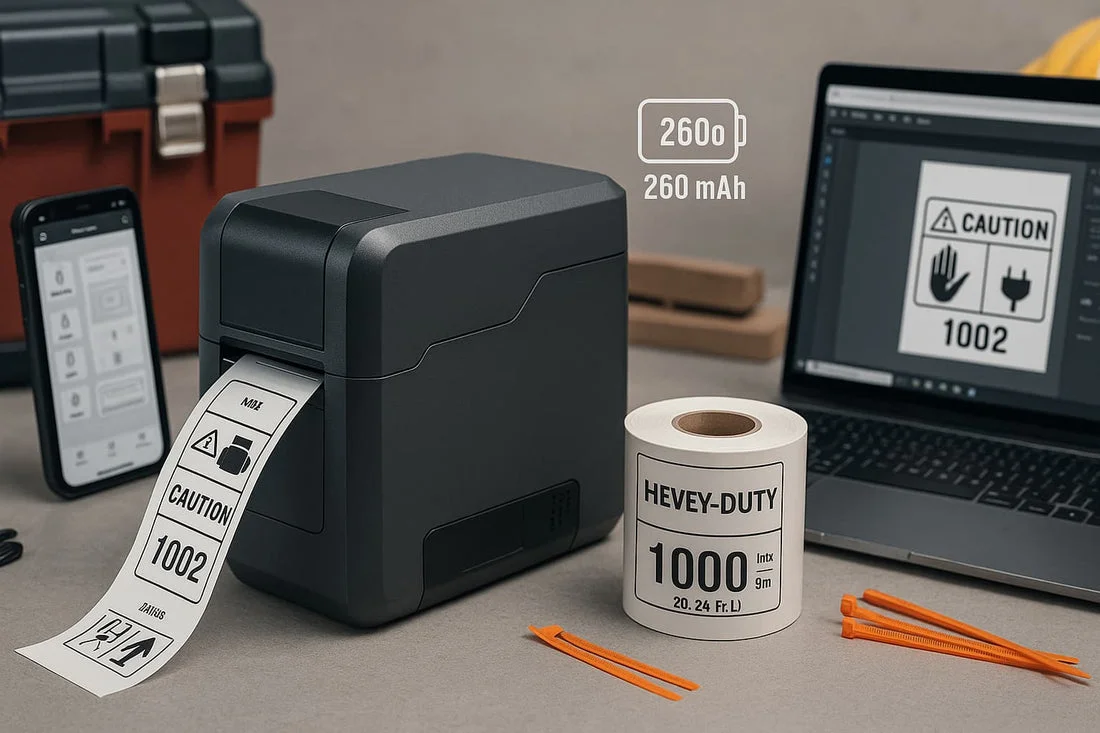
How to choose an office label maker that keeps systems clear
For the active product shortlist, start with LeStallion’s 6 Best Label Makers for Office Organization review, then use this support guide to judge readability, tape durability, workflow speed, refill cost, shared standards, and long-term organization value.
Labeling Plan. A label maker is most useful when it supports a simple office system, not random one-off stickers. Files, bins, cables, shelves, drawers, and shared supplies need names that people understand later. For office label maker research, the useful test is whether the label maker makes organization easier to keep after the first cleanup day.
Labeling Plan check. List what needs labels before comparing machines; the system decides the tape width and features.
Readability. Labels should be readable at the distance where people actually use them. Tiny text can look neat but fail on shelves, folders, or storage bins. For office label maker research, the useful test is whether the label maker makes organization easier to keep after the first cleanup day.
Readability check. Check font size, contrast, tape color, and whether labels remain clear in low light.
Workflow Speed. Office labeling often happens in batches. A slow keyboard, confusing menu, or awkward app can turn a simple cleanup into a chore. For office label maker research, the useful test is whether the label maker makes organization easier to keep after the first cleanup day.
Workflow Speed check. The best workflow lets someone create several useful labels without stopping to relearn the device.
Tape Durability. Labels may face fingers, dust, sunlight, cable heat, drawer friction, or cleaning wipes. Tape type matters as much as the printer. For office label maker research, the useful test is whether the label maker makes organization easier to keep after the first cleanup day.
Tape Durability check. Match tape material to the surface: paper files, plastic bins, cable flags, metal shelves, or fabric-adjacent areas.
Shared Standards. Shared offices benefit from consistent label style. Matching names, capitalization, dates, and locations make labels easier to trust. For office label maker research, the useful test is whether the label maker makes organization easier to keep after the first cleanup day.
Shared Standards check. Create a naming rule before everyone prints their own version of the same shelf.
Refill Cost. Tape refills can quietly shape long-term value. A cheap machine may become expensive if tape is wasteful or hard to source. For office label maker research, the useful test is whether the label maker makes organization easier to keep after the first cleanup day.
Refill Cost check. Compare refill availability, tape length, and waste at the beginning and end of each print.
File-cabinet rehearsal. Imagine labeling an active file area: client folders, archive boxes, intake trays, outgoing mail, and seasonal paperwork. The label maker should produce clean, consistent labels quickly enough that the system actually gets finished. If the process is slow, offices often stop halfway and clutter returns.
Supply-room logic. Supply rooms need labels that are clear from the doorway and durable enough for repeated handling. Pens, toner, paper, envelopes, cables, batteries, and cleaning items should be easy to locate without asking another person. A good label maker reduces repeated interruptions.
Cable and charger use. Cable labels need a different approach than folder labels. They may require flexible tape, flag-style placement, or smaller text that still reads near a power strip. A label maker for office organization should handle chargers, docks, adapters, and meeting-room cables without peeling quickly.
Desk reset routine. Labels help desks reset after busy weeks. Drawer sections, inbox trays, spare peripherals, and shared tools become easier to return to the right place. The goal is not a rigid office; it is a workspace where ordinary items have a visible home.
App-connected tradeoff. App-connected label makers can be fast for templates, icons, and saved designs, but they depend on phones, Bluetooth, accounts, or updates. Built-in keyboards feel more direct. Choose the workflow the team will actually use during a quick cleanup session.
Template discipline. Templates are useful when they prevent inconsistent formatting. Date labels, asset tags, folder tabs, and storage-bin names can follow one pattern. Too many decorative choices can slow decisions, so practical offices often benefit from a small set of approved label styles.
Surface preparation. Even good tape fails on dusty, damp, oily, or textured surfaces. Wiping shelves and bins before labeling can matter more than the printer itself. A label that stays flat and legible for months is better than a fancy label that curls in a week.
Inventory moments. Label makers become especially valuable during moves, reorganizations, onboarding, and annual cleanouts. Those moments create many small decisions at once. Fast printing, easy refills, and readable labels help teams create order while motivation is still high.
Accessibility and clarity. Clear labels help new employees, temporary staff, students, clients, and facilities teams find things without guessing. Use plain words, avoid insider shorthand, and place labels where a person naturally looks. Good labels reduce friction for people who did not create the system.
Waste control. Label tape waste can add up when printers leave long margins or require reprints. Previewing text, using batch print, and choosing the right label length can reduce waste. Value is partly about how much usable labeling each refill actually produces.
End-of-month check. A labeling system should still make sense after a month. If labels are peeling, names are confusing, or people keep putting supplies in the wrong place, adjust the wording and placement. The best label maker supports a living system, not a one-day cleanup photo.
Final buying lens. Before buying, picture a real organizing session from messy shelf to finished labels. The machine should make naming, printing, trimming, applying, and refilling feel simple. If any step feels fussy, the office may avoid using it when clutter returns.
Growth buffer. Leave room for the office to grow. New categories, project boxes, spare devices, and archive folders will appear. A useful label maker should support new label sizes or saved formats so the system can expand without looking mismatched.
Professional appearance. Labels are small, but they influence how organized an office feels. Straight, readable, consistent labels make shared areas look intentional. This matters in reception storage, client-facing shelves, classrooms, clinics, and any room where visitors can see behind the scenes.
Maintenance habit. Set a small habit for removing outdated labels. Old names, abandoned projects, and expired dates create confusion. A label maker is most helpful when the office also has a routine for refreshing labels as supplies, people, and workflows change.
Training shortcut. A label maker should be simple enough for a new employee or volunteer to use after a short explanation. If only one person understands the menus, the office system becomes fragile. Clear buttons, saved formats, and predictable tape loading make the tool more useful for the whole team.
Storage bin reality. Bins often sit above eye level, below desks, or inside cabinets, so labels need to be readable from awkward angles. Wider tape and strong contrast can help. A label that looks elegant up close may fail if someone has to crouch, reach, or scan a shelf quickly.
Cable label caution. Cable labels should not create stiff bends or sticky residue near connectors. Use flexible placement and short, clear names like monitor, dock, printer, or charger. The goal is fast identification during troubleshooting, not decorative wrapping around every inch of cable.
Archive and date logic. Offices with archive boxes, tax files, project folders, or HR packets often need dates as much as names. A label maker that handles consistent date formats helps people know what is current, what is stored, and what may need review later.
Shared-space trust. Labels build trust when they match what is actually inside a drawer or bin. If people open a mislabeled container too many times, they stop trusting the system. Good office organization includes checking labels during restocks, moves, and seasonal cleanouts.
Labeling Systems for Desks, Files, and Supplies
Labeling Systems for Desks, Files, and Supplies gives one focused way to compare a label maker before reorganizing files, bins, cables, shelves, or shared office supplies.
Print Quality, Tape Width, and Readability
Print Quality, Tape Width, and Readability gives one focused way to compare a label maker before reorganizing files, bins, cables, shelves, or shared office supplies.
Keyboard, App, and Fast Office Workflow
Keyboard, App, and Fast Office Workflow gives one focused way to compare a label maker before reorganizing files, bins, cables, shelves, or shared office supplies.
Durable Tapes for Shelves, Cables, and Bins
Durable Tapes for Shelves, Cables, and Bins gives one focused way to compare a label maker before reorganizing files, bins, cables, shelves, or shared office supplies.
Shared Team Use and Label Standards
Shared Team Use and Label Standards gives one focused way to compare a label maker before reorganizing files, bins, cables, shelves, or shared office supplies.
Value, Refills, and Long-Term Maintenance
Value, Refills, and Long-Term Maintenance gives one focused way to compare a label maker before reorganizing files, bins, cables, shelves, or shared office supplies.
Bottom-line label maker check
After narrowing the options, revisit the LeStallion office label maker shortlist and compare it with your file system, tape needs, shared naming rules, refill budget, and cleanup routine.
Cloud-chain note: this OVH support guide follows the prior Firebase page on desk cable management solutions, keeping the workspace-organization path connected near the bottom.